

Magnesite Floor Removal
Safe removal and replacement of deteriorated magnesite flooring across Sydney.
Built On Experience.
Driven By Quality.


Magnesite flooring was widely used in Australian apartment buildings from the 1930s to 1960s as a cheap, easy-to-lay flooring topping. Decades on, it's now a well-known problem: magnesite is highly corrosive to embedded steel and reinforcement, retains moisture, and deteriorates with age — often without any visible warning until flooring begins cracking, lifting, or crumbling.
What Is Magnesite Flooring?
Magnesite (or "magnesite oxychloride") flooring is a cement-like topping laid directly over structural concrete slabs, common in older apartment blocks and some commercial buildings. It was popular for its low cost and quick installation, but it has since proven to cause serious long-term problems as it ages.
Is Magnesite Flooring Dangerous?
Yes — magnesite flooring poses several risks as it deteriorates:
Corrosion: magnesite is chemically corrosive to steel reinforcement and can accelerate concrete cancer in the slab beneath it
Moisture retention: it holds moisture against the structural slab, worsening corrosion and dampness issues over time
Structural deterioration: as it breaks down, it can crack, crumble, and create trip hazards
Concealed damage: because it's usually covered by carpet, tiles, or timber flooring, deterioration is often well advanced before it's discovered
Our Removal & Remediation Process
Assessment — confirming the presence and condition of magnesite flooring, often during renovation or a broader defect assessment
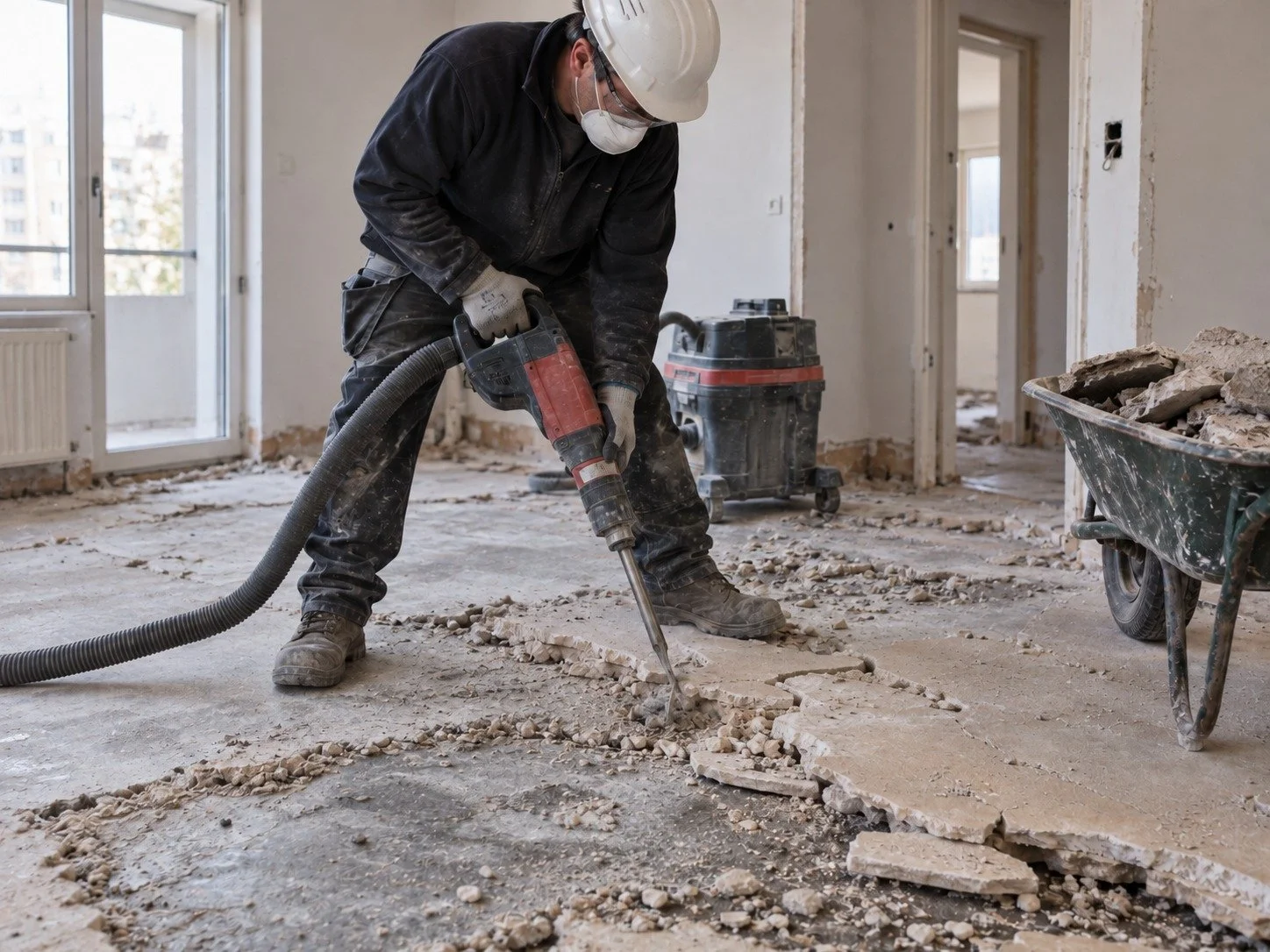
Safe removal — magnesite is broken out and removed, with appropriate handling and disposal
Substrate inspection — checking the structural slab beneath for corrosion or concrete cancer caused by the magnesite
Remediation — treating any corrosion or concrete damage found in the slab
Preparation for new finishes — substrate is prepared and levelled, ready for new flooring
Magnesite Floor Removal FAQ
-
Buildings constructed between the 1930s and 1960s are most at risk. It's often only discovered once existing flooring is lifted during a renovation or defect assessment.
-
It's not an immediate health hazard, but it accelerates corrosion in the structural slab and deteriorates over time, making early removal and remediation important once identified.
-
No — magnesite flooring cannot be effectively repaired once deteriorating. Removal and remediation of the substrate underneath is the only reliable long-term solution.
-
This depends on where it was used — some buildings have it throughout common areas and units, others in isolated areas. An assessment will confirm the extent.